Mostrando entradas con la etiqueta English. Mostrar todas las entradas

Advertising Management in the Basque Online Press. Vocento and Noticias Groups

Aitor Castañeda's paper in Disinformation and Credibility in the Dygital Ecosystem - XII Internacional Conference on Online Journalism (University of the Basque Country [UPV/EHU], November 2020). Proceedings edited by Koldobika Meso, Simón Peña and Ainara Larrondo, Servicio Editorial de la UPV/EHU (ISBN: 978-84-1319-284-0), pages 51-61

Abstract available in the Proceedings Book (978-84-09-24825-4), edited by Mr. Meso, Mr. Peña and Ms. Larrondo (2020), p. 20


Abstract. This research analyzes digital advertising’s management in the Basque Country’s biggest information groups: Vocento and Noticias. Digital advertising is one of the most important financial sources at the press. However, online journalism has not a unified business model. We pretend to know ads-contracting processes, formats, technology and results-measuring in the Basque Country’s principal diaries. Using structured interviews, we obtain information from commercial directors of CM (Vocento) and Editorial Iparraguirre (Noticias), who give their answers to research questions. Both interviewees clarify the versatility of digital advertising, preferring multi-screen formats for ads, and Cost Per Mille impressions as the best indicator to measure advertising effectiveness. Besides, they consider subscriptions the only way to avoid advertising during navigation, and branded content as the leading financial source with advertising for the press.

Graphic humor on the Internet. Descriptive approach towards online press cartoonists in the Basque Country

Abstract. This article pretends a descriptive analysis of the location and visuality of the cartoons of the widest ranging Basque cyber diaries with the best importance and diffusion. Trough a detailed research method, we showed and described the humorous work of the cartoonists in the cyber environment. We concluded that the newspapers with Basque nationalist ideology are who give the best importance to their cartoonists, as they have mentionable historic antecedents regarding cartoons.

Read the article here

Citation:

Castañeda Zumeta, A. (2020) “Graphic humor on the Internet. Descriptive approach towards online press cartoonists in the Basque Country”, Sancho el Sabio - Basque culture and research journal, (43), pp. 72-95. Available at: https://revista.sanchoelsabio.eus/index.php/revista/article/view/298

Leer en castellano / Euskaraz irakurri

Digital advertising in Euskadi. Online advertising-management of generalist journals of the Basque Autonomous Country

 Abstract:

This research analyses the management processes of advertising in digital journals of general information in the Basque Autonomous Country (Spain). The research shows the most demanded advertising formats for the press, as well as its business models, metrics and perspectives for the future. Researchers interviewed advertising managers of the four main press groups of the Country. The managers described the versatility of the Advertising, preferring multiscreen formats and the CPM per impressions to measure the its efficiency. They also focus on branded content as a financial source for digital newspapers, as well as advertising.

Read the article here

Cite it:

Epalza Lahuerta, Egoitz; Castañeda Zumeta, Aitor; Pazos Illarramendi, Malen (2020). «La publicidad digital en Euskadi. Gestión publicitaria en línea de los diarios generalistas de la Comunidad Autónoma del País Vasco», Zer, 25(49), 189-204. https://doi.org/10.1387/zer.21636

Read it in Spanish

La ciudad vasca a través del humor gráfico de la serie “Zakilixut” (1977): de la Tierra Madre a la ciudad moderna

Communication of Aitor Castañeda in the International Conference The City: Images and Imaginaries, hold in Getafe (Spain) March 2018. Publishing: University Carlos III of Madrid (2019), Ana Mejón, Farshad Zahedi, David Conte Imbert (eds.), ISBN: 978-84-16829-44-6

--

La ciudad vasca a través del humor gráfico de la serie “Zakilixut” (1977): de la Tierra Madre a la ciudad moderna


Abstract. Sabin Arana, the father of the Basque national movement, defined the city as a focus of industrialization that filled the province of Biscay –and by extension, all the Basque Country– with Spanish people that, according to him, did denature the Basque national identity, poisoning it with a foreign culture and atheism, establishing that way the paradigm of the real Biscayan –or Basque– who lived in the mountains and kept their traditions, an idea that was rejected by intellectuals of that time, as Miguel de Unamuno. However, the idea of Arana regarding the urban environment was kept by decades in Spain. But in the early 70's, during the Spanish Transition, the Basque nationalism suffered a change, when many Marxist and leftist movements embrace this ideology, giving it a new theoretical corpus, in which the Basque identity outstripped the race and religion and jumped into the social diversity of the city, the core of modernity. That way, the newspaper Egin –“To do” in Basque– was born in 1977, being nationalist and leftist, and in whose humoristic pages appeared the cartoon Zakilixut –name that can be translated as “Erected Penis”– a character created by Antton Olariaga and that is analyzed in this paper. Zakilixut is a character that walks alone from a telluric space to a urban one, making obscene jokes about the natural elements he comes across, and deforming a nature environment that many Basque young people had as something sacred, the “Mother Earth”. Zakilixut walks to a city that is the symbol of the Marxism and nationalist people, who is also atheistic and Spears the modern unified Basque language. All in all, the research concludes that Zakilixut and the newspaper Egin became the symbol and the voice of a new society, who gets even with the traditional Basque national dogma and created, using humor as well, a new urban reality.

Communicative ecology in coronavirus SARS-CoV-2 times. From momentun catastrophicum to virus veritas

Abstract. The coronavirus disease has put in check the stability of institutions and health organizations, as well as the veracity of such institutions and press. We can identify pandemic and infodemic (WHO) at the same time. This article pretends to describe the panorama of the aforementioned situation, putting attention to the journalistic principles, the Spanish informative environment, and the informative work of the World Health Organization. We conducted this research using concrete case studies and bibliometrics. We conclude that it is necessary to return to the citizen's need for receiving accurate and verified information. Public institutions and science shall work together to avoid infodemic, informative saturation, and fake news

Read the article (Spanish) here

Cite the article:
PEÑAFIEL, Carmen; RONCO, Milagros & CASTAÑEDA, Aitor (2020). "Communicative ecology in coronavirus SARS-CoV-2 times. From momentun catastrophicum to virus veritas". RECS - Revista Española de Comunicación en Salud, Sup. 1, 328-338. https://doi.org/10.20318/recs.2020.5466 
Leerlo en castellano

Graphic humor in on and off line editions of the newspapers of the Basque Autonomous Community and Navarre (2019). A descriptive approach

Abstract:
The aim of this brief research is to investigate the graphic humour of the on and off line newspapers of the Basque Autonomous Community and Navarre. Graphic humour, is analysed here using a systematic and descriptive method. Cartoons of even digital or printed editions of El Correo, El Diario Vasco, Deia, Diario de Navarra, Noticias de Navarra, Berria and Gara are studied. Consequently, and apart from giving Basque cartoonist some academic prestige, it can be seen the situation and management of the graphic humour on the local press. As a result, the good health of graphic humour of the Basque press is showed.

Read the paper here

To cite it:
CASTAÑEDA, Aitor (2020). Graphic humor in on and off line editions of the newspapers of the Basque Autonomous Community and Navarre (2019). A descriptive approach. Uztaro, 113, 67-90. https://doi.org/10.26876/uztaro.113.2020.4 
Euskaraz irakurri 

Organization of Conferences in English

Aitor CASTAÑEDA has participated in the organization of the following academic events in English:


Conferences:
SCIENTIFIC COMMITTEE
Ikasnabar Conference - Open education and technology
    • Ikasnabar.2014: Microcontents, miniMOOCs and mLearning.
    • From 24th to 26th June 2014.
ORGANIZATION COMMITTEE
Ikasnabar Conference - Open education and technology
    • Ikasnabar.2013: MOOCs, PLEs and eLearning platforms.
    • From 9th to 11th July 2013.
BROADCASTING AND COMMUNICATION
Graphic designer. Ikasnabar conference - Open education and technology 
    • Ikasnabar.2013: MOOCs, PLEs and eLearning platforms.
    • From 9th to 11th July 2013.

Cross-borders 2016: University of the Basque Country / University of Pau and the lands of Adour

From 10th to 14th October 2016, the University of the Basque Country (UPV/EHU, Spain) and the University of Pau and the lands of Adour (UPPA, France) planified a cross-border doctorial in Salies-de-Béarn (Pyrénées Atlantiques, France). Many Spanish and French PhD students of both universities had the chance to take part in a training program on leadership skills, leaded to develop their professional career in a near future.
Here is the pic taken by the organization comitee of the UPV/EHU, followed for another taken by one of my working time, funnier and younger. A time to remember!


Own source.

Come on, sheeps!


Artistic video done by Joana DUHALDE and Aitor CASTAÑEDA in 2009. This short parody shows the ilogical attitude of fans of musicians and singers, who can be consiered gods by their fans.

Lost love


A short video that describes the story of a generic couple in love, with their problems and reconciliation at the end.
  • Authors: Joana DUHALDE and Aitor CASTAÑEDA.
  • Technique: Video economy (using videos from another authors).
  • Music: Coldplay, Viollet Hill.

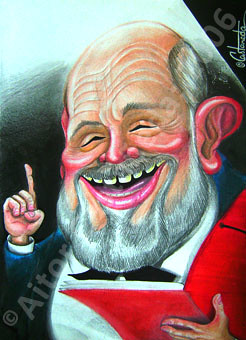
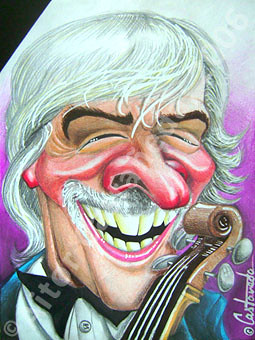
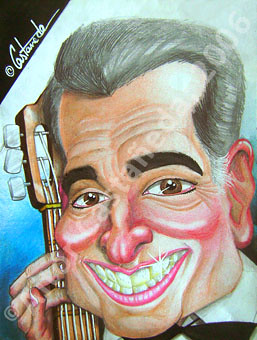
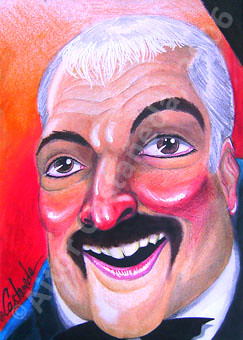
Les Luthiers

LesLuthiers_02LesLuthiers_01LesLuthiers_05LesLuthiers_03LesLuthiers_04

Silverspace Animation - Design of scenes

Scenes designed for a short film of Silsverspace Animation Studios. | Made with: Designing tablet and Photoshop.


Silverspace Animation - Characters

Character design for a short film of Silsverspace Animation Studios. | Made with: Designing tablet and Photoshop.


Sea monster, made with LightWave


TV with simple animations


Experimental animation effects. | Made with: LightWave.

Creation


A short demostration of a fetus growing up | Made with: LightWave.

KLASK!


 A performance done by Aitor CASTAÑEDA and Joana DUHALDE.

The main character wants to recover his clothes on a room where his finger snap makes the objects dessappear... And his own body too!

The Basque Country - Euskal Herria

In infography to explain my foreign student what the Basque Country is, through a juridical and cultural view. You can use it using creative commons license.


(Click on it to enlarge)

The promotion of democracy in political cartoons. The themes of cartoons in the Basque newspaper EGIN (1977)

ABSTRACT: This article aims to identify the different themes explored in the comic strips published by the Basque newspaper Egin (1977/98) during its first year of operations. This nationalist newspaper had a great impact on the Basque society during the Spanish transition to democracy because it was the first left-wing publication in the Basque Country and because it devoted a whole page to graphic humour. Method. The study is based on the thematic analysis of the comic strips published in the entertainment section of the aforementioned newspaper throughout 1977. Quantitative techniques were used to identify and measure the frequency of occurrence of the diversity of issues and themes. Results and conclusions. The results show the clear preference of cartoonists for issues related to the promotion of democracy, as well as the existence of an opposition within the premises of traditional Basque nationalism against the new form of nationalism promoted by leftist movements.

Read the article here.

To cite the article:
Aitor Castañeda & Paula Pineda-Martínez (2016): “The promotion of democracy in political cartoons. The themes of cartoons in the Basque newspaper Egin (1977)”. Revista Latina de Comunicación Social, 71, pp. 232 to 248. http://www.revistalatinacs.org/071/paper/1093/13en.html DOI: 10.4185/RLCS-2016-1093en
Video:

Cross-border doctorials: University of the Basque Country / University of Pau and the lands of Adour

From 13th to 17th October 2014, the University of the Basque Country (UPV/EHU, Spain) and the University of Pau and the lands of Adour (UPPA, France) planified a cross-border doctorial in Arantzazu (Gipuzkoa), promoted by Team Academy-Euskadi and Tecnalia.

Many Spanish and French PhD students of both universities had the chance to take part in a training program on leadership skills, leaded to develop their professional career in a near future.

I went there with UPV/EHU, having a great time there. Here are some photos of the event, and there an entrance in the web of the UPV/EHU.


Own source.

Source: Tecnalia.